Dauphin Island, Alabama, is a landscape of constant transition. Here, the rich outflow of Mobile Bay collides with the salt of the Gulf of Mexico, creating a vibrant, nutrient-dense estuary. This dynamic environment of shifting sands, deep channels, and sprawling flats makes for a perfect flounder habitat. While these flatfish can be found in countless locations, one of the most productive methods for consistently targeting them is the channel drift. It is a simple technique in principle, but its effective execution requires a deep understanding of current, contour, and contact.
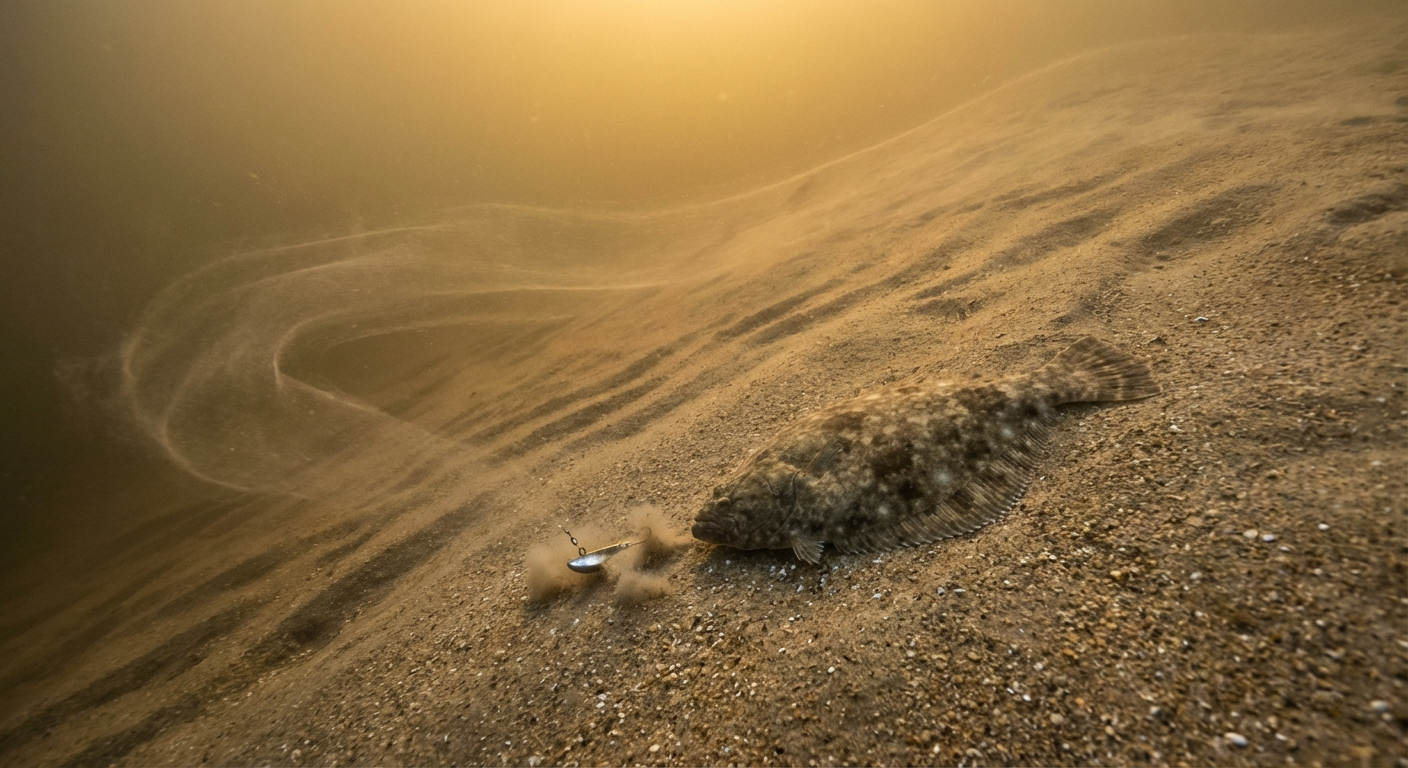
The fall migration is prime time. As water temperatures begin to drop, flounder move out of the back bays and marshes, staging in channels and passes before heading offshore. This predictable movement concentrates the fish in specific, reliable areas. Spring offers a similar opportunity as fish return to the inshore feeding grounds. Success hinges on presenting a bait naturally along the bottom where these ambush predators lie in wait, camouflaged and ready to strike.
This is not a game of high-speed retrieves or aggressive topwater strikes. It is a patient, tactical approach that rewards attention to detail. The art is in using the boat, wind, and tide as tools to achieve a perfect, slow crawl across the bottom, putting your offering directly in the strike zone for extended periods.
Gearing Up for the Bottom Bouncers
The right tackle for channel drifting is all about sensitivity. The flounder bite is rarely aggressive. Often, it feels like a subtle "thump," a slight tick in the line, or just a spongy weight where there was none before. A heavy, unresponsive setup will cause you to miss most of your opportunities.
A 7-foot, medium-light power, fast-action spinning rod is an excellent choice. This provides the backbone to handle a quality fish but retains the tip sensitivity needed to detect a subtle take and feel the bottom composition. Pair this with a 3000-series spinning reel spooled with 15-pound test braided line. The near-zero stretch of braid is critical for feeling the light pickup and for driving the hook home in deep water or a strong current.
To the braid, attach a three-foot section of 20-pound fluorocarbon leader. An FG knot is the superior connection, but a well-tied double-uni knot will also suffice. The fluorocarbon provides abrasion resistance against shell beds and is less visible to the fish. For your terminal tackle, a Carolina rig is a classic and effective choice. Use just enough weight, typically a 1/2 to 3/4 ounce egg sinker, to maintain steady bottom contact. A 1/0 or 2/0 wide gap or Kahle hook is perfect for live bait. Alternatively, a simple jighead in the 1/4 to 3/4 ounce range, chosen based on depth and current speed, works exceptionally well with both live bait and soft plastics.
The Right Offering: Live Bait and Imitations
Flounder are not exceptionally picky eaters, but they respond best to offerings presented near the bottom. The undisputed king of flounder baits in this region is the live bull minnow, also known as a cocahoe minnow. Hooked through the lips from the bottom up, it stays lively and presents a natural target. Live shrimp are a close second.
High-quality soft plastics can be just as effective and are often more durable. The Gulp! Swimming Mullet or Shrimp on a jighead is a go-to for many seasoned anglers. The built-in scent dispersion is a significant advantage, drawing fish in and encouraging them to hold on after the initial strike. Chartreuse, white, and root beer are consistently productive colors in the Mobile Bay system.
Mastering the Dauphin Island Drift
Your drift is your presentation. The goal is a slow, controlled pass over productive bottom. The ideal speed is between 0.5 and 1.5 miles per hour. Any faster, and your bait will lift out of the strike zone. Any slower, and you will not cover enough ground.
Start by identifying promising areas on your chart plotter. Look for the edges of the main shipping channel, cuts between islands like Little Dauphin Island, or passes such as Pass Drury. The key is a bottom with contour changes, like shell beds, sand bars, or subtle drop-offs. Flounder use these features as ambush points.
Position your boat up-current and, if possible, upwind of your target zone. The tide is your primary driver. A light wind that pushes with the tide is ideal, creating a straight, manageable drift. If the wind opposes the tide, you may need a drift sock to slow your pace and keep the boat perpendicular to the drift path. This allows multiple anglers to fish effectively off one side of the boat without tangling lines.
Once the drift is established, cast your line out about 50 feet from the boat. Let it sink to the bottom. With a Carolina rig, you will feel the sinker hit bottom first, followed by the bait. With a jighead, it is a single impact. From here, the game is all about contact. Hold your rod tip low and keep just enough tension to feel the weight bumping along the seafloor. You should be able to discern the difference between soft mud, gritty sand, and the hard knock of oyster shells. If you lose contact, you are moving too fast or your weight is too light. If it constantly snags, you may need to go a bit lighter.
The bite itself requires patience. After feeling the initial "thump," do not immediately set the hook. Flounder often grab the tail of a bait first to immobilize it. You must give the fish a moment to take the entire bait into its mouth. Drop your rod tip toward the water, feeding it a little slack, and count to five. Then, reel up any slack and apply firm, steady pressure. A sweeping hookset is more effective than a sharp, jerky motion.
Common Mistakes to Avoid
- **Drifting Too Fast:** This is the most common error. If your line is scoping out at a sharp angle behind the boat, you are moving too quickly and the bait is not on the bottom. Use a drift sock or your trolling motor to slow down.
- **Premature Hookset:** Resisting the urge to immediately rear back on the rod is difficult, but critical. Give the flounder time to eat.
- **Losing Bottom Contact:** Daydreaming for a moment can be the difference between success and failure. You must actively manage your line to ensure you are always feeling the bottom.
- **Wrong Weight:** Using a weight that is too heavy deadens the feel, while one that is too light never reaches the strike zone. Adjust your jighead or sinker weight as the current and depth change.
Local captain call
These tactics are a practical baseline for this pattern, but they are not a rigid script. On any given day, your charter captain will know the specific channel edge, drift line, and bait adjustment that fits the real conditions better than anyone else. If your captain tells you to change jig weight, drift angle, or cadence, follow that call.
Safety and Regulations
Navigating Dauphin Island's channels requires vigilance. Be aware of commercial and recreational vessel traffic, especially in the main shipping channel. Always check the local weather forecast before heading out, as conditions can change rapidly.
Anglers must have a valid Alabama saltwater fishing license. Flounder regulations, including size and bag limits, can change from year to year. Always consult the most current guide from the Alabama Department of Conservation and Natural Resources before your trip. The best practice is to handle fish with a wet towel or gripper to protect their slime coat and release any non-legal fish quickly. Local charter captains are an invaluable source of real-time information on what is biting and what regulations are in effect. Their expertise is always worth considering.