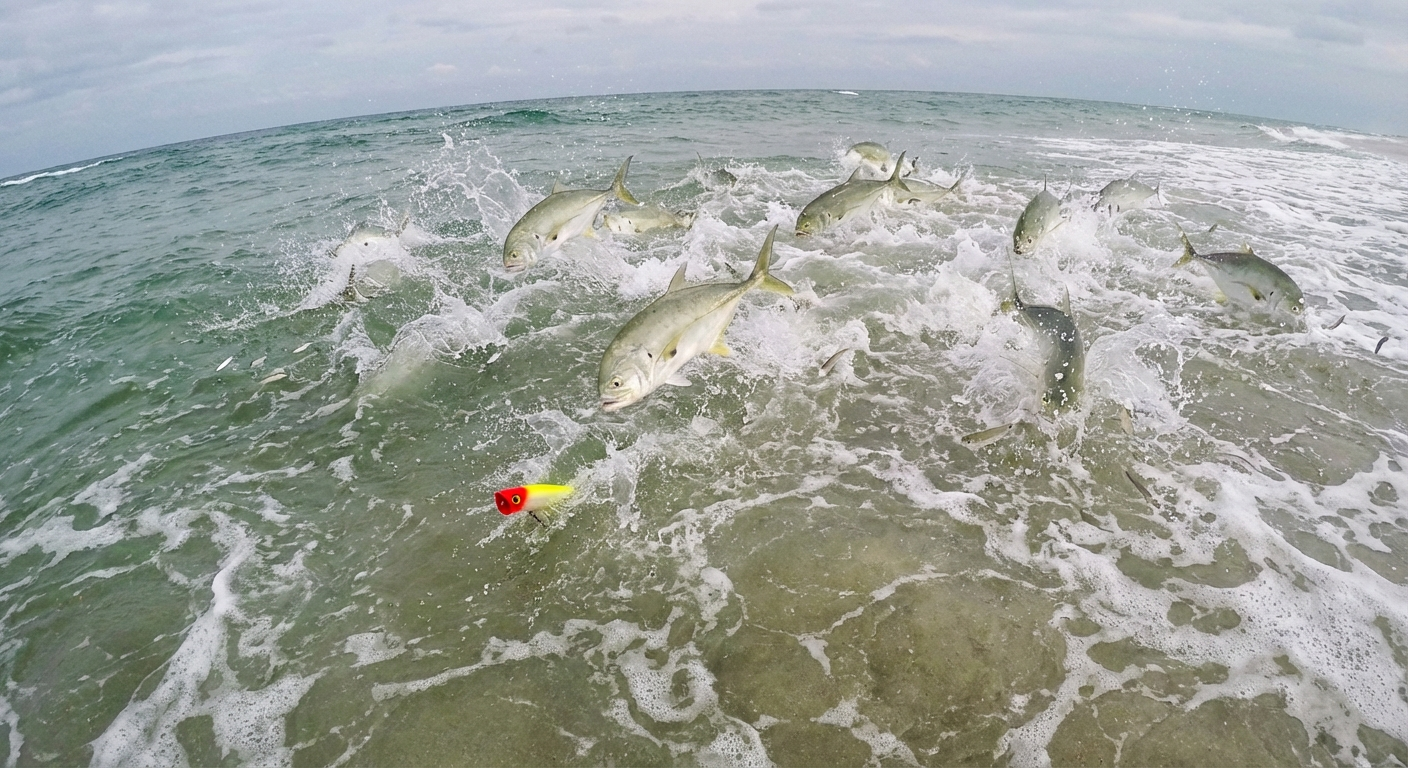
When jack crevalle push bait down the Port Aransas beachfront, the whole zone can flip from quiet to violent in seconds. Birds crash, mullet spray, and the surface starts boiling like someone dropped cinder blocks into a swimming pool. If you are in range with the right gear and can get a cast into the moving edge, you get one of the hardest fights available in nearshore Gulf water.
This is not finesse fishing. It is pace, positioning, and execution. Jacks move fast, schools split and merge, and the best bite can be over in five minutes if you miss your first two opportunities.
These tactics are a practical baseline, but local charter captains in Port Aransas usually read these moving schools faster than anyone. If your captain calls an angle change, a relocation, or a faster bait swap, follow that call. Real-time school movement matters more than any static plan.
Why this pattern is different
Jack crevalle are built for speed and pressure. They pin bait against shoreline bars, color lines, and current seams, then feed in waves. They are often mixed with other predators, but the behavior is distinct:
- broad, aggressive surface pushes
- fast-moving pressure lanes
- short feeding windows that restart nearby
Most missed opportunities happen because anglers treat this like a stationary structure bite. It is a moving target game.
Conditions that improve the beach run
You can catch jacks in many conditions, but these factors usually increase consistency:
- moderate water clarity where bait and surface pressure are visible
- wind that stacks bait along a defined beach edge or seam
- tide movement that creates clear current lanes off bars and cuts
- active bait presence, mullet schools, glass minnows, or rain bait
Early morning often gives cleaner visual reads, but afternoon wind and tide can still produce major runs.
Gear that matches the fight
Jacks punish weak setups. Build for repeated long casts and brutal runs.
Rod and reel - 7 to 7'6" medium-heavy spinning rod with strong midsection - 4000 to 6000 size reel with proven drag and good heat handling
Line and leader - 20 to 30 lb braid for casting distance and quick pickup - 30 to 50 lb leader depending on bycatch and water clarity - strong connection knot you can tie fast and trust
Lures that stay in the zone - 1 to 2 oz casting spoon for distance and speed - 4 to 6 inch paddle tail on heavy jighead for subsurface follow fish - compact metal jigs for deep edge drops when schools sound
Terminal details - keep hook points sharp - replace split rings before they fail, not after - run drag smooth, not locked
Reading schools before you cast
Do not cast at the center of chaos. Cast where fish will be in two seconds.
Look for: - leading edge of the push - side edge where stragglers break off - down-current bait exits where fish loop back
A common mistake is throwing directly into explosions and dragging through dead center. Better play is leading the school and bringing lure across its travel lane.
A charter captain running this bite will usually position the boat for a cross-angle cast, not a straight chase. That keeps anglers in range longer and prevents constant overrun.
Boat and beach positioning
Whether you are on a skiff, bay boat, or beach vehicle launch pattern, position control is everything.
On a boat - stay outside the school’s travel line - make controlled parallel approaches - avoid blasting through feeding lane with outboard noise
From beach access points - move light and fast with two ready rods - pick elevated visual lines when possible - watch for where bait gets trapped between bars and troughs
If schools are leapfrogging down-beach, do not grind one dead pocket for twenty minutes. Reposition ahead.
Retrieve mechanics that convert follows into bites
Jacks will hit speed, but retrieve choice should match fish behavior.
Start mode - fast, steady burn with spoon to trigger reaction
If fish track but do not commit - add hard speed burst then short pause - or drop to paddle tail and run just under the surface push
If school sounds - count lure down and work aggressive lift-fall near edge marks
Hookset and fight - with single hooks, sweep hard and keep pressure - with trebles, keep tension smooth and avoid high-stick angles
When hooked, clear deck and communicate. One jack through open rods can wreck a whole setup in seconds.
Common mistakes that cost fish
Casting too late - if lure lands behind school, your best shot is gone
Chasing surface noise blindly - find travel direction first, then cast
Underestimating drag heat - long jack runs expose weak drag fast
Using light leader in heavy bycatch zones - kings and sharks can show up in same lane
Ignoring safety around surf and prop wash - excitement causes rushed decisions
Not listening to captain reposition calls - school movement is dynamic, and boat angle is tactical
Safety and regulations
Beach-run chaos can make people sloppy. Stay disciplined.
- keep deck clear of loose tackle during rapid repositioning
- maintain spacing from swimmers and beach traffic
- monitor weather and lightning continuously
- wear eye protection, long casts and metal lures create risk
Regulations can shift by area, season, and management updates. Verify current Texas and federal rules day-of through official sources and a current rules app before retaining fish.
If you are on charter, defer final legal retention calls to your captain. Captains are tracking day-of rule updates and local enforcement patterns in real time.
Closing approach
Port Aransas jack runs reward anglers who can read movement, cast to travel lanes, and keep pressure organized when things go loud and fast. The bite looks wild, but the best outcomes come from controlled decisions.
Keep your process tight, move ahead of the school, and treat your captain’s real-time adjustments as an advantage, not a suggestion. Do that, and this pattern will give you some of the most violent and memorable strikes on the coast.