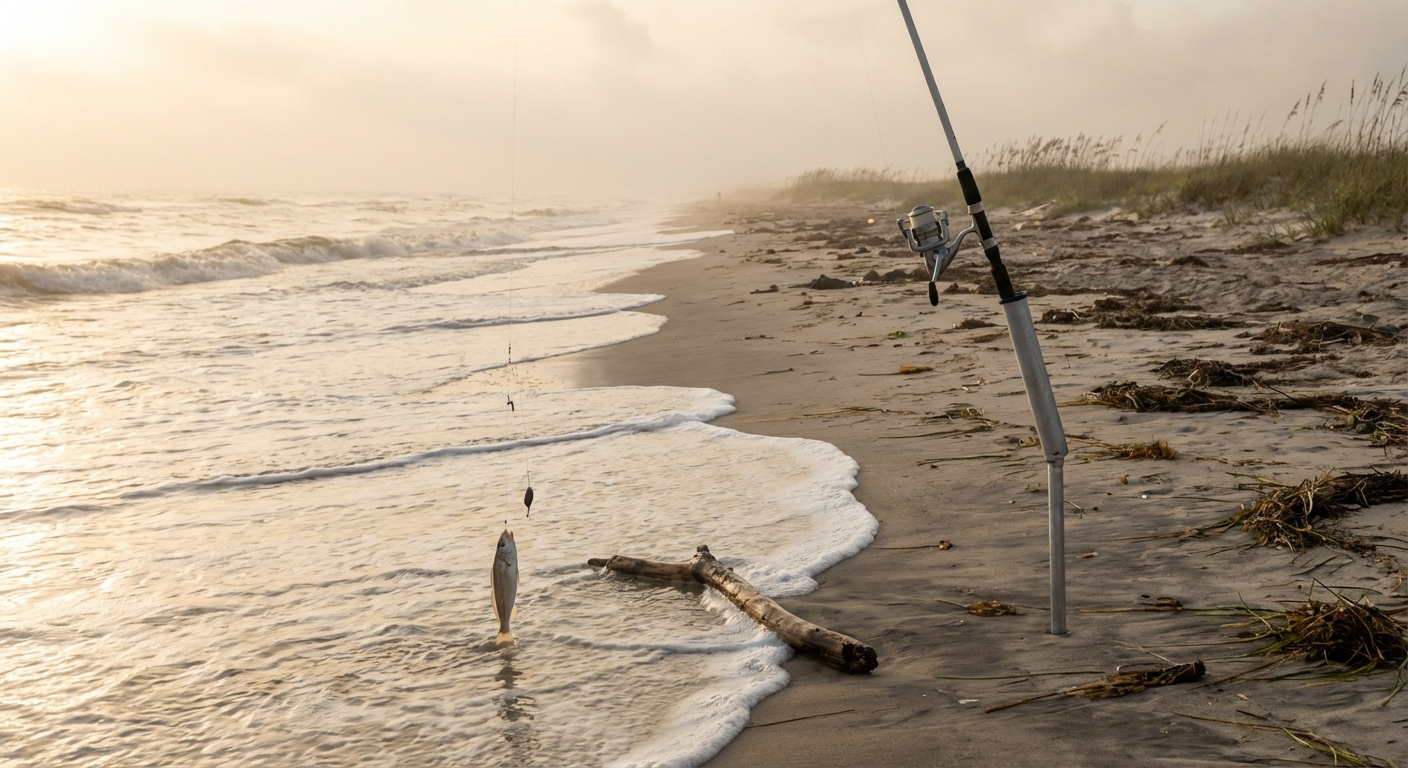
Fort Morgan is one of those places where simple fishing still works if you do the details right. Whiting are a perfect example. They are not flashy, and most days they are not hard to catch, but they are still easy to miss if your rig, placement, or timing is off by a little.
The double-drop surf rig is one of the most reliable setups on this beach because it keeps two baits in the strike zone, covers more depth in the trough, and gives you a clean way to fish cut bait or shrimp without overcomplicating anything.
This guide is the practical version. It is the setup many local anglers use when they want a steady bite and a cooler with good eating fish.
Local conditions can change quickly. Use this as a baseline and then adjust based on what your local captain or surf guide is seeing that day.
Why this pattern works at Fort Morgan
Whiting feed close to the bottom and cruise the surf troughs looking for sand fleas, shrimp, and small cut pieces. At Fort Morgan, the fish often hold in one of three zones:
- the first trough just outside the wash
- the deeper second trough on a cleaner tide
- cuts where moving water drains off the bar
A double-drop rig helps because one hook rides slightly higher and one lower. If fish are hugging bottom, the lower bait gets picked up. If they are sliding through a little higher in the water in active surf, the upper drop can get hit first.
This matters on days when waves and sweep are changing hour to hour.
Gear that makes this easy
You do not need expensive gear, but you do need sensible gear.
Rod and reel - 9 to 11 foot surf rod with enough backbone to hold bottom in sweep - 4000 to 6000 size spinning reel with smooth drag
Main line - 15 to 20 lb braid for better bite feel and smaller line diameter in current - or 15 to 20 lb mono if you prefer simpler shock absorption
Rig and terminal tackle - double-drop (pompano style) rig with 20 to 30 lb branch line - #2 to 1/0 hooks depending on bait size and bycatch - 2 to 4 oz pyramid or Sputnik sinker based on current and wind
Bait - fresh dead shrimp pieces - Fishbites style strips as backup and scent extender - small cut bait when shrimp peckers are heavy
If the surf is rough, step sinker weight up first before changing the whole rig. Most anglers change too many variables too fast.
Reading the beach before the first cast
The best whiting anglers at Fort Morgan spend five minutes scanning before they cast.
Look for: - darker lanes running parallel to beach (deeper trough) - breaks in the outer bar where water pushes in or out - small rip seams, not dangerous rips, but visible current edges - cleaner water pockets between muddy bands
If you can identify a trough and a cut, start there. If not, start with the first trough and move every 15 to 20 minutes until you get taps.
Whiting often school tight. No bites in one spot does not mean no fish on the beach.
The standard double-drop workflow
1) Set your spike where you can watch line angle and tip clearly. 2) Cast beyond the wash into the first or second trough. 3) Let sinker settle and tighten line until tip has steady tension. 4) Keep line as straight as possible to reduce drag in sweep. 5) Watch for quick taps, then a more committed pull.
With smaller hooks and whiting mouths, a hard hookset is usually unnecessary. A steady lift and reel pressure is enough.
If pinfish or small bait thieves are pecking you clean, downsize bait pieces and rebait faster. Better to fish fresh small baits consistently than one oversized dead chunk that gets stripped.
Bait size, timing, and cadence
Most anglers lose efficiency here.
Bait sizing - shrimp piece about thumbnail to coin size on #2 to 1/0 hook - enough hook point exposed for clean connection
Rebait timing - in active pecker zones, check every 5 to 8 minutes - in cleaner water, 10 to 12 minutes is fine
Cast cadence - do not cast constantly - let the rig soak long enough for scent trail to build - if dead for 15 to 20 minutes, move 30 to 60 yards
Whiting fishing is controlled repetition. Small improvements stack fast.
Drift and sweep management
Fort Morgan can get sideways current that drags your rig off target.
When sweep is moderate - increase sinker one step - cast slightly up-current so rig settles where you want
When sweep is heavy - switch to a grippier sinker style - shorten leader droppers slightly to reduce tangles - lower rod angle and keep tight line to improve bite detection
If your line is bowing badly, you are not really fishing the target trough anymore.
Common mistakes that cost fish
Overbaiting hooks - too much bait masks hook point and kills hookups
Too little weight - if your sinker rolls, your baits are not staying in feeding lane
Not moving - anglers sit on dead water too long
Ignoring water color shifts - whiting often feed better in cleaner seams next to dirty water
Slow rebait cycles - stripped hooks are common and go unnoticed
Using only one distance all day - fish slide between first and second trough with tide and wave energy
Safety and regulations
Beach and surf safety first - watch longshore current strength before wading - avoid deep cuts during heavy pull - keep hooks and knives organized, especially with kids nearby - lightning and summer storms move fast, get off the beach early
Regulations - do not hardcode limits from memory - verify current Alabama and adjacent federal rules day-of using official sources and the Fish Rules app - rules can shift by species, area, and management updates
If you are fishing with a charter or local guide, treat that captain’s compliance call as final on the water. They track updates and local enforcement realities in real time.
Keeping fish quality high
Whiting are excellent table fish if handled right.
- bleed or ice fish quickly
- keep fish cold and dry, not soaking in warm meltwater
- clean same day when possible
Good handling makes average fish taste great.
Final field note
The Fort Morgan double-drop whiting pattern is not complicated, and that is why it is dependable. Clean beach read, sensible sinker weight, fresh bait, fast rebait cadence, and small moves until you find active fish.
Keep your process tight, let local experts guide final adjustments, and this pattern will produce steady action on days when overcomplicated setups struggle.