The Shadow Casters of the Louisiana Coast
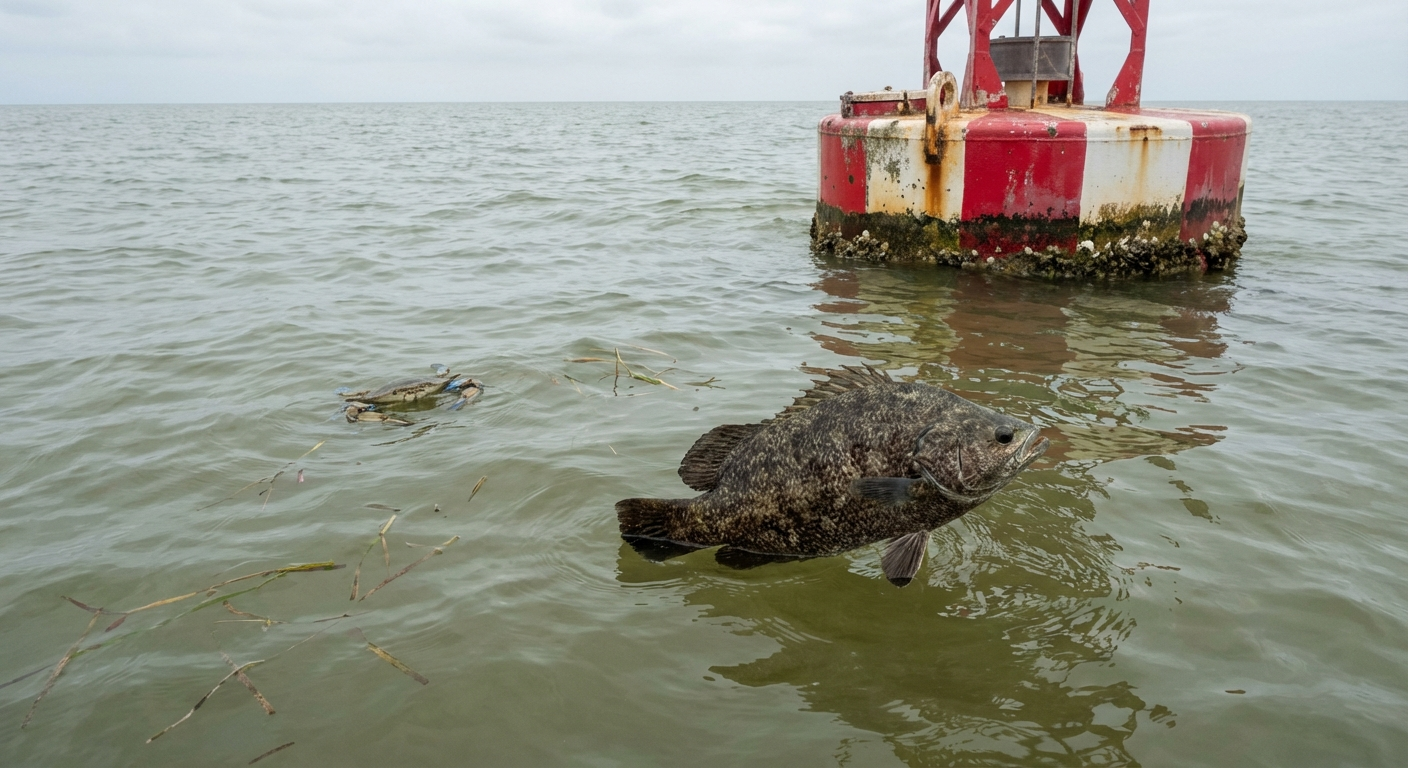
The water off Grand Isle, Louisiana, shimmers under the summer sun, a vast expanse of green and blue that stretches to an endless horizon. It’s a place of immense productivity, where the nutrient-rich outflow of the Mississippi River fuels a vibrant marine ecosystem. Scattered across this expanse are the channel markers and buoys that guide maritime traffic. To the passing vessel, they are simple aids to navigation. To the observant angler, they are floating oases, magnetic points of structure that attract one of the Gulf’s most peculiar and challenging gamefish: the tripletail.
Often mistaken for a piece of floating debris, the tripletail is a master of camouflage. Its flat, mottled body and unique habit of lying on its side just beneath the surface make it nearly invisible against a backdrop of sargassum or shadow. With its large dorsal and anal fins extending far back towards its tail, it appears to have three tails, hence its name. Catching them isn’t about blind casting; it’s a visual hunt, a game of spotting, stalking, and presenting the perfect bait to a fish that can be exceptionally wary. And around the buoys of Grand Isle, the perfect bait is almost always a live crab.
This is the art of the crab pitch, a technique that combines the thrill of sight-fishing with the delicate presentation required to fool a discerning predator. It is a quintessential Louisiana fishing experience, demanding patience, sharp eyes, and a steady hand.
Why Buoys? Understanding the Tripletail Habitat
To consistently catch tripletail, you first have to understand why they are so drawn to floating structure. These fish are ambush predators that relate heavily to cover. In the open waters of the Gulf, any object that casts a shadow or creates a current break becomes a valuable piece of real estate.
Buoys, channel markers, and even floating patches of grass or debris offer several key advantages: 1. **Shade and Camouflage:** The shadow cast by a buoy provides excellent cover for the tripletail, allowing it to blend in and become nearly invisible to both prey and predators. Its dark coloration is perfectly adapted for this shadowy environment. 2. **Ambush Point:** Small fish, shrimp, and crabs are also drawn to the structure for protection and to feed on the algae and marine growth that accumulates on its surface. The tripletail positions itself to ambush these unsuspecting creatures as they venture out from the cover. 3. **Current Break:** The structure provides a welcome respite from the prevailing current, allowing the fish to conserve energy while it waits for a meal to drift by.
As local charter captains will tell you, not every buoy will hold fish. The key is to check as many as possible. Some days the fish prefer the larger channel markers, while other days they’ll be holding tight to smaller crab trap floats. The pattern can change with the tide, sun angle, and time of day, making the search part of the challenge.
Gearing Up for a Precision Engagement
The tackle for pitching crabs to buoy-hugging tripletail is a balance of strength and finesse. You need the backbone to pull a powerful fish away from structure, but also the sensitivity and casting accuracy to make a delicate presentation.
**Rod and Reel:** A 7-foot to 7-foot-6-inch medium-heavy power, fast-action spinning rod is ideal. This setup provides the length for good casting distance and the tip sensitivity to feel the subtle take, while the strong butt section helps you turn the fish’s head. Pair it with a quality 3000 or 4000-size spinning reel with a smooth, reliable drag system.
**Line and Leader:** Spool your reel with 20 to 30-pound braided line. Braid has zero stretch, which is critical for detecting the light bite and getting a solid hookset. It also offers a thin diameter, which helps with casting distance and performance in the wind. To the braid, connect a 3 to 4-foot section of 30 to 40-pound fluorocarbon leader. Fluorocarbon is nearly invisible underwater, a crucial advantage when targeting sharp-eyed fish in clear water. Use a proven connection knot like a Double Uni or an FG knot to join the braid and leader.
**Rigging the Crab:** The terminal tackle is simple but critical. A 3/0 or 4/0 live bait or circle hook is the standard. A circle hook is highly recommended, as it typically results in a clean hookset in the corner of the fish's jaw, which is better for the fish and reduces the chance of the hook pulling free.
To rig a live crab, insert the hook point through the shell from the bottom up in one of the two small points on either side of the main shell spike. This allows the crab to swim naturally and keeps the hook point exposed for a solid connection. For this style of fishing, the bait is almost always free-lined, with no weight or cork. The goal is the most natural presentation possible.
The Art of the Approach and Pitch
Success in this game is often decided before you even make a cast. Your approach to the structure is everything.
**Boat Positioning:** Use a trolling motor to approach the buoy from down-current or upwind. This allows you to quietly close the distance, using the natural forces to your advantage. A noisy, gasoline-powered approach will send a wary tripletail diving for the depths instantly. Kill the main engine well away from the structure. Your goal is to position the boat so you can make a cast that leads the fish, allowing the current to drift the crab right to it.
**Spotting the Fish:** As you approach, scan the water around the buoy intently. A good pair of polarized sunglasses is absolutely essential. Look for a dark, symmetrical shape holding in the shadow line. It might look like a dark leaf or a small log at first, but a trained eye will quickly learn to pick out the subtle outline of the tripletail.
**Making the Pitch:** Once you’ve spotted a fish, the cast must be precise. Do not cast directly on top of the fish, as this will almost certainly spook it. Instead, aim your cast several feet up-current and past the fish. The crab should land softly and drift naturally back towards the buoy, right into the fish’s strike zone. This mimics how a real crab would be washed along by the current, presenting an irresistible opportunity.
**The Bite and the Fight:** If your presentation is good, the tripletail will often glide over and simply inhale the crab. You may not feel a dramatic strike; often, you will just see the fish move and your line will start to tighten or move sideways. When using a circle hook, resist the urge to perform a traditional, hard hookset. Simply point your rod tip at the fish, reel down until the line is tight, and let the rod load up. The hook will turn and find its purchase in the corner of the jaw.
Once hooked, a tripletail is a stubborn fighter. Its broad body provides a lot of leverage in the water, and its first instinct is to dive straight back to the buoy chain or any other nearby structure. Apply firm, steady pressure to pull the fish into open water. After the initial powerful runs, the fight often becomes a vertical tug-of-war.
Common Mistakes and Captain's Wisdom
Even experienced anglers can make simple errors when targeting tripletail. According to veteran Grand Isle guides, a few common mistakes account for most missed opportunities.
* **The Noisy Approach:** "The biggest mistake I see is people running right up to the buoy with their big motor," one captain notes. "These fish are not dumb. You have to treat it like you're hunting, not just fishing." * **Casting a Shadow:** Be aware of the sun's position. If the shadow of your boat, or your own body as you stand to cast, falls over the fish, the game is over. Always approach with the sun in your face if possible. * **Unnatural Drift:** Casting up-current of the buoy but down-current of the fish is a frequent error. This creates a scenario where your line drifts over the fish before the bait does, which will often put them down. The bait must lead the line and leader. * **The Jerk Hookset:** With circle hooks, the classic "grip it and rip it" hookset will only pull the bait right out of the fish's mouth. It's a hard habit to break, but patient, steady pressure is the key.
A Word on Safety and Regulations
A day offshore from Grand Isle can be a fantastic experience, but safety must always be the first priority. Summer weather in the Gulf is unpredictable, and thunderstorms can build quickly. Always check the marine forecast before you leave the dock and keep an eye on the sky. File a float plan with someone on shore so they know where you are going and when you expect to return.
It is also critically important to be aware of current fishing regulations. Size limits and bag limits for tripletail can and do change. Do not rely on old information. The only way to be certain is to check the latest regulations directly with the Louisiana Department of Wildlife and Fisheries before your trip. A quick visit to their website or a call to their office is a mandatory step for any responsible angler.
The Reward of the Hunt
The tripletail is a prize worthy of the effort. It’s a beautiful, hard-fighting fish that offers a supreme challenge to the sight-fisherman. More than that, it provides an exceptional meal, with firm, white, and flaky flesh that is among the best in the Gulf.
But the true reward lies in the process itself. It’s in the quiet stalk, the tense moments of scanning the water, the surge of adrenaline when a dark shape materializes in the shadow of a buoy. It’s in the satisfaction of a perfectly placed cast and the connection you feel when a plan comes together. Fishing for tripletail off Grand Isle is more than just catching; it’s a pure and engaging coastal pursuit, a perfect blend of skill, patience, and the raw beauty of the Louisiana coast.