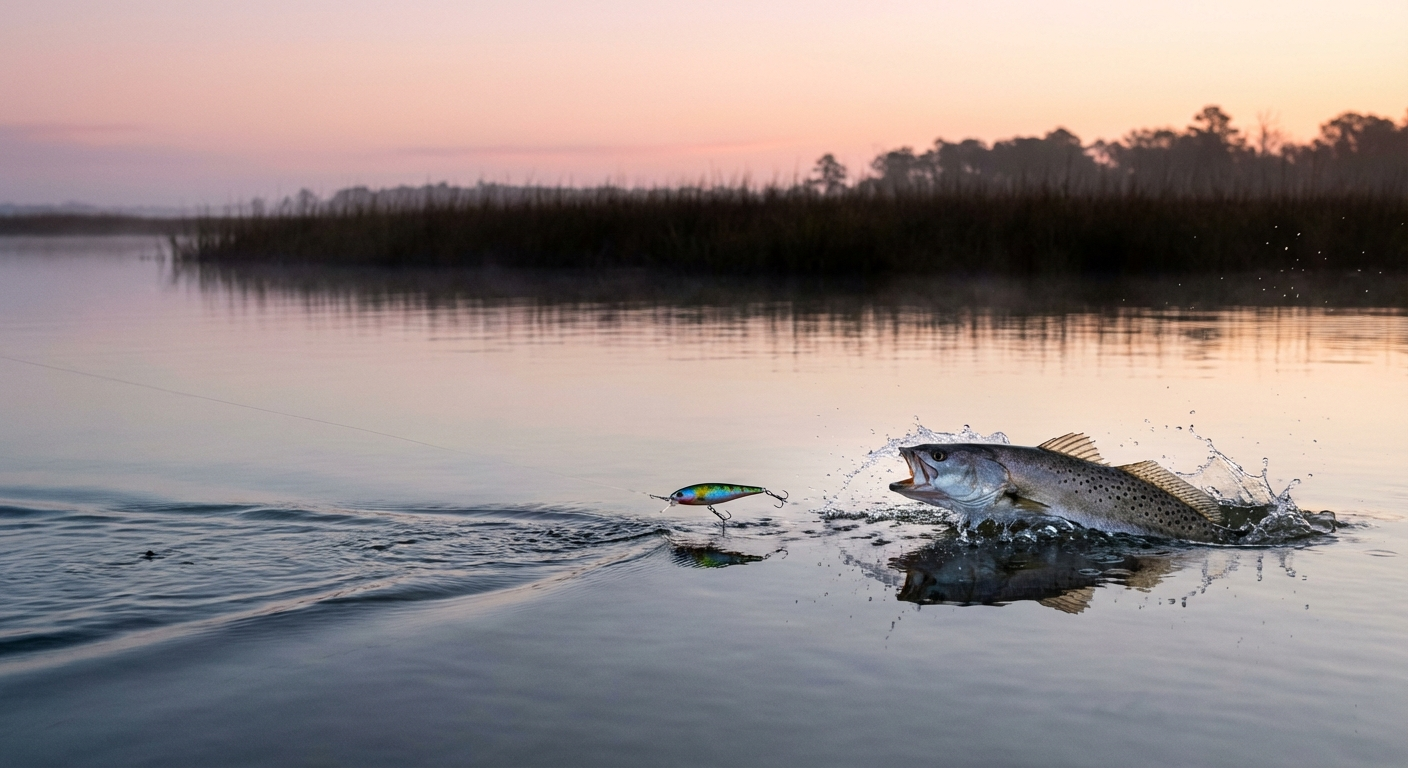
There is a short window on the Mississippi coast when topwater trout fishing feels almost unfair. It happens at first light, when bait is shallow, boat traffic is light, and speckled trout are willing to push up and feed aggressively before the sun gets high. In Gulfport waters, that window can be narrow, sometimes forty-five minutes, sometimes two hours, but when you hit it right, it is one of the most fun bites on the coast.
This pattern is not random. It is built on timing, water movement, and clean presentation. If you get all three lined up, you can turn a quiet morning into a steady topwater bite without overcomplicating anything.
These tactics are a practical baseline for private-boat anglers, but local charter captains often dial this pattern in faster than anyone because they track daily water color, bait position, and traffic pressure. If your captain changes the plan on the fly, follow that call.
Why dawn topwater works here
Speckled trout in Gulfport zones commonly feed around grass edges, shell lines, shallow drains, and subtle depth changes near bay mouths and open-sound transition water. At daybreak, light levels are low and trout are comfortable pushing shallow. They use that low light to ambush mullet, glass minnows, and shrimp that ride current seams over shallow structure.
Once sun gets high and water slicks out, fish often slide deeper or get more selective. That is why first-light setup matters more than lure color debates.
Conditions that stack the odds
Topwater mornings improve when these factors line up:
- moving tide, especially first part of incoming or last part of outgoing
- light wind or manageable chop that breaks surface glare
- clean to moderately stained water, not chocolate mud
- visible bait activity, flips, wakes, or nervous slick lanes
A dead-still, no-current morning can still produce, but you usually need tighter placement and longer pauses.
Tackle that keeps this simple
You do not need heavy gear for this bite. You need control and consistency.
Rod and reel - 7-foot medium spinning rod with a responsive tip - 2500 to 3000 reel with smooth drag
Line and leader - 10 to 15 lb braid for long casts and solid lure control - 20 lb fluorocarbon leader, roughly 24 to 30 inches
Lure profile - walk-the-dog topwater plug in natural mullet or bone pattern - one slightly louder plug for choppy mornings - one smaller profile for calm water and pressured fish
Hook setup - sharp stock hooks are often fine, but check points every trip - replace damaged split rings quickly, do not gamble
Spot selection in Gulfport water
You are looking for feeding lanes, not just pretty shoreline.
Best first stops are usually: - grass edge next to a defined trough - shell-to-sand transitions - points where current pinches and bait gets funneled - subtle drains that dump into a wider flat
At dawn, make your first few drifts or trolling-motor lanes long enough to learn how current is carrying bait. Do not camp one tiny patch for thirty minutes if no bait is present.
A local captain will usually pick a sequence of 2 to 4 stops based on tide stage and recent bait movement. That sequencing is often the difference between chasing ghosts and finding an active school.
Presentation mechanics that matter
Most misses on topwater trout are mechanics, not fish mood.
Start with a steady walk-the-dog cadence - short rod-tip taps - maintain slight slack so lure can glide side to side - keep rhythm steady for first ten to fifteen feet
Then add variation - brief pause near swirl or wake - speed up for three to four pulls if fish tracks but does not commit - stop hard for one beat after a miss, then restart
Cast angles - do not cast only parallel to shoreline - throw across seam and quartering-current angles - work lure through the feeding lane, not around it
Hookset discipline - trout often explode and miss first pass - keep reeling, wait for weight, then sweep into fish - do not trout-set on splash alone
Boat position and noise control
This gets ignored too often.
On skinny morning water, noise carries. If you slam lids, stomp, or run hard over the zone, your bite quality drops fast.
Practical boat rules: - set up upwind or up-current and drift quietly through lane - use trolling motor sparingly near active fish - keep deck movement calm when someone is casting - keep net ready so fish are landed quickly and quietly
If you are on charter, your captain’s boat position call should be final. Captains reading bait and current in real time will reposition faster than a static article plan can account for.
Common mistakes that kill this pattern
Starting too late - by the time sun is up, your best topwater window may already be gone
Overworking one lure speed - trout mood changes with light and chop, vary cadence
Setting on splash - wait for weight, then sweep
Ignoring bait location - no bait, no trout, move sooner
Too much hardware tinkering - constant lure swapping wastes prime minutes
Poor line management - wind knots and loose drag settings lose fish on first run
What to do when the topwater window dies
Good crews do not force topwater past its prime.
If blowups stop and follows fade: - switch to suspending twitchbait over same lane - then soft plastic on light jighead if fish slide deeper - keep same structure pattern, just change depth zone
This is another place where local captain judgment is worth real money. Good captains know when to leave the hero cast and transition quickly to keep rods bent.
Safety and regulations
For Gulfport mornings, keep safety simple and disciplined: - run lights properly before daylight - watch for crab trap floats and low-profile skiffs at dawn - monitor weather continuously, summer storms build fast - keep hydration and sun protection on deck even early
Regulations can shift by season, area, and management updates. Do not hardcode old limits from memory. Verify current rules day-of through official state and federal sources and a current rules app before you keep fish.
If you are fishing with a charter captain, defer final retention and compliance calls to the captain on that day’s trip. Charter captains track local updates and enforcement realities in real time.
Closing approach
Gulfport dawn topwater trout fishing is one of the cleanest patterns on the coast when you treat it like a process instead of a guessing game. Launch early, fish moving water, stay quiet, work disciplined cadence, and move when bait is absent.
Keep your approach flexible and let real-time captain judgment guide final adjustments when conditions shift. Do that, and your odds of hearing that topwater blowup at gray light go up in a big way.