The first call with your charter captain usually comes before the engines even fire. In Panama City, a knowledgeable captain will know whether the offshore buoy clusters, public artificial reefs, wreck strings, and high-relief bottom along the 80- to 220-foot contour are holding amberjack. That makes their voice the first rule of the pattern, because they are the ones watching sonar, current, and bait reports in real time. Their judgment about which structure to hit, which tide shift to respect, and when to light the spread overrides any checklist of tactics.
Amberjack are aggressive, fast, and structure-attached. They sit on buoys, flags, reef domes, and the steel skeletons of sunk rigs, waiting for bait to arrive. That latticework of vertical and horizontal relief also attracts king mackerel, cobia, big gag grouper, and even shark. It is that mix that keeps chasers in the zone even after your golden jack bite slows.
Gear and rig basics
This pattern is heavy, but not complicated. Pick a legitimate deepwater setup and commit to it.
- Rod: 6'6" to 7' conventional rod rated for 50 to 100 class line. The rod needs to flex enough to wrestle a 40+ pound jack, but still feel sharp enough to detect a light tap.
- Reel: a heavy conventional two-speed or high-capacity lever-drag reel with a smooth drag curve for managing long, hard runs. Light spinning setups can work, but they must have excellent line capacity and heat resistance for repeated hooksets.
- Line: 50 to 80 lb braid with a 60 to 120 lb fluorocarbon leader. The leader handles abrasion from the structure and the jaws of a jack.
- Hooks: 7/0 to 9/0 circle or straight shank circle hooks. Circle hooks help keep the fight in the corner of the jaw, especially when you are dealing with repeat bites in tight structure.
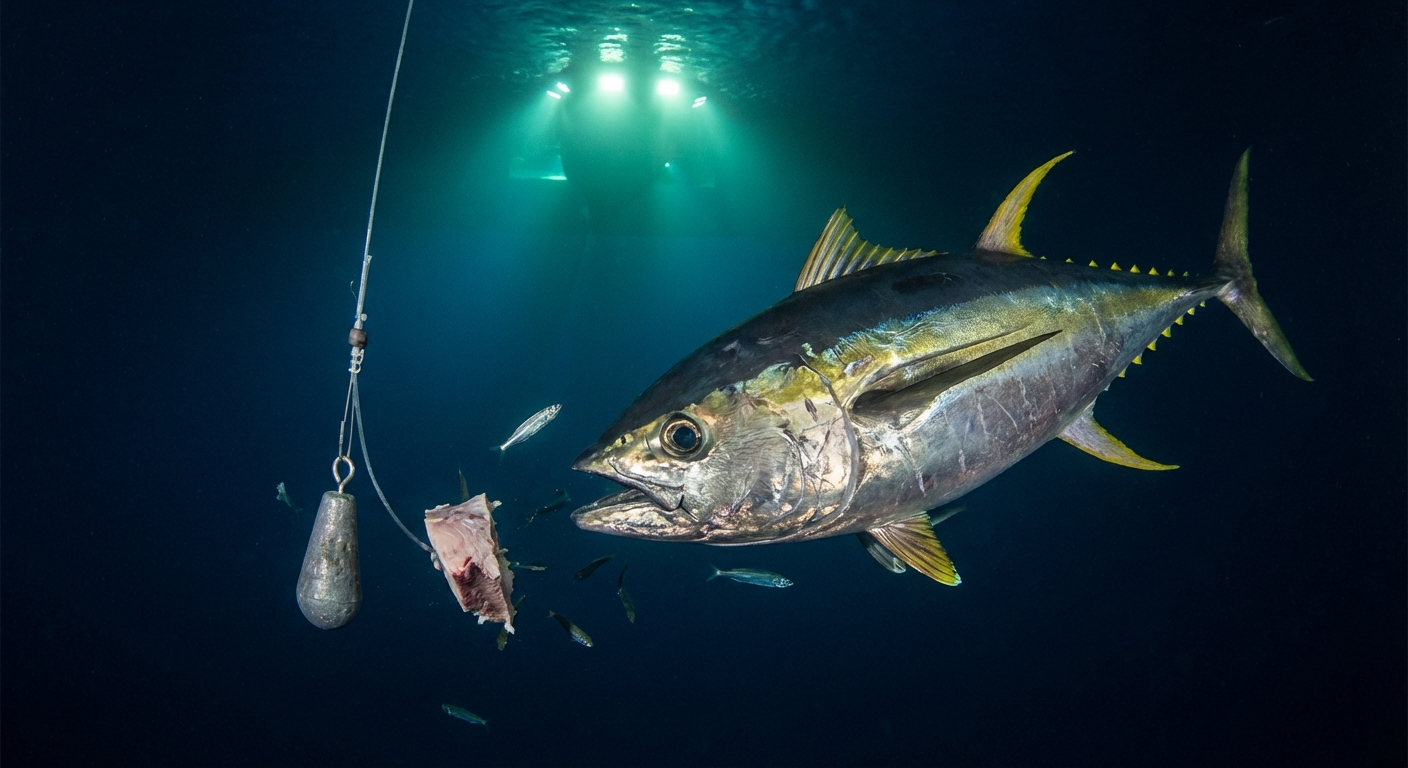
- Chunking rig: Use enough lead—typically 6 to 16 ounces depending on current—to keep the bait in the strike lane. Tie a low-profile swivel to the mainline, add a 24 to 36-inch leader, and attach the hook. Keep extra split rings and leader material ready, because the final run into the buoy shadow will nick fluorocarbon.
Live or dead bait? Both are valid. Cut baits like bonita, cigar minnows, sardines, or hardtail (blue runner) pieces release scent fast and draw aggressive hits. Live bait rigs let you extend bite windows, but they require tidy bait management at night. Your captain will tell you which to trust based on run-in tide and visibility.
Reading the structure lines
Panama City is blessed with a mosaic of offshore buoys, permitted artificial reefs, and wrecks that run along the 80- to 220-foot contour. Amberjack show up where current funnels bait into the shadow of that structure, creating a column of fish-holding water. The most productive targets are the buoys and reef heads that hug the deeper contour lines and the dozen or so public reef complexes that provide vertical relief.
Use sonar to spot the vertical feature. Amberjack are attracted to the light breakup created by bait swarms, so any buoy that draws a thick bait cloud on the screen is worthy of a chunking run. Your captain will call the start point. They know whether the current has shifted the bait East or West and whether the buoy is in the strike zone. Follow that call even if you see a different boat in another area; the boat you booked is there for a reason.
The process is disciplined: approach the structure up-current, let the chunk free-spool to the desired depth (often 20 to 40 feet above the bottom on these deep marks), then maintain a controlled drift so the bait slides through the light and shadow curtain. Keep your line in the strike zone with a handful of slow turns or short, controlled lifts to keep the bait active without dragging it out too fast. If the bait slides too far down-current, adjust boat position and line angle to keep it working the seam off the structure, rather than reeling straight toward the buoy; keep the chunk 10 to 30 yards off the buoy while you monitor slack for subtle rides. Amberjack usually relate to the structure, but they will rush out aggressively when a chunk drifts into their lane, so stay ready for sudden sprints from the shadow.
Target mix around the buoys
Amberjack share these hangouts with other predators.
- King mackerel gobble the faster-moving cut bait; a king strike often feels like a sudden slash, followed by a screaming run or a clean cut-off.
- Cobia patrol the edges of the buoy, especially when current is slack. They will follow the chunking spread waiting for a free meal.
- Gag and red grouper tuck into the base, and you may draw a quick hit when the chunk drifts too close to bottom.
- Sharks may show up on the surface line; if they do, move or be ready to break off quickly with a fresh leader.
Presentation details that trigger strikes
Pick a cadence and stick with it until a better one surfaces. Amberjack respond to steady, confident movement more than random wobbles. Here’s a reliable routine:
1. Drop the chunk and let it free-spool until the bait hangs a few feet off the bottom or slides into the shadow edge, keeping a touch of tension on the line. 2. Make short, slow lifts—6 to 12 inches—and let the bait settle back, keeping the line tight enough to feel contact but loose enough to avoid dragging rigs into structure. 3. When the chunk falls through the strike plane, pause for a heartbeat; many hits come on the drop. 4. If a jack grabs it, maintain steady pressure, turn the fish away from the buoy, and use the rod to keep it from diving into the wreck.
When the bite slows, adjust your angle or depth slightly. Let the chunk drift closer to the buoy, change the pause length, or add a brief, sharp bump before letting it fall. Amberjack usually stick near structure, but they will snipe a bait that drifts into their active lane, so keep the rig moving through the feeding column.
Common mistakes to avoid
- Too much weight. Heavy sinkers bring the bait straight into the wreck, where you get hung rather than bit.
- Chasing every splashing boil when it happens off the main buoy. Stay disciplined.
- Letting the drift get sloppy. Manage line angle and tension with thumb pressure and short cranks, and set drag heavy enough to turn fish before they reach the structure.
- Ignoring the crowd. If a live bait boat is already chunking a buoy and your captain says the bite is stale, move. The best hits usually come on the buoy that just went quiet for a reason.
- Failing to check knots. A 100-pound fish pulling through a corroded loop will ruin the night.
Safety and regulations
Boat control is the safer first move. When you operate near navigation buoys, keep your distance, drift or powered position quietly, and never anchor on or crowd the marker. If you are working a wreck, reef, or permitted buoy where anchoring is allowed, use proven ground tackle and keep the rode clear, but re-coil quickly so the boat can move if conditions change. Always manage slack so that only a short, responsive bow feeds through your rod tip, especially during bites.
Always verify current federal and Florida rules day-of through NOAA, FWC, or the Fish Rules app before you keep fish. Greater amberjack management hinges on seasons or closures, minimum fork lengths, and bag limits that can differ between private and for-hire sectors. Check those updates before you fish, and treat your captain’s retention recommendation as a compliance partner for the latest limits, without assuming it can override the written law.
Closing approach
Chunking around these buoys is a simple, heavy pattern, but it only works when you respect structure, follow your captain’s calls, and control every presentation. Stay disciplined in weight, line angle, and boat position, keep the decks clean, and treat the other predators sharing the buoy as bonus bites. Once you hook into a screaming amberjack and keep it in open water with the crew working in sync, you’ll understand why Panama City structure runs are such a treasured slice of the Top-50 gamefish experience.